Difference Between Paperless, Digitized and Complete Workflows in Project Documents
Project Documents
You can’t achieve team cohesion by using technology that prevents team cohesion. This blog will give you three simple insights into project documents that will improve your technological understanding.
The three insights are the difference between paperless, digitized workflow and team cohesion, otherwise known as “complete digitized workflows,” which is rare. It’s an overused term in software sales, and you must be very careful when you hear the term “complete digitized workflows.” Through this blog, we’re going to explain the difference between the three terms and give you enough technological understanding to protect yourself against overselling in the industry.
What does Paperless mean?
Paperless is just a picture or a picture of a form. It’s basic because the information within it is not extractable. If you need to use that information somewhere else, you must manually transcribe it.
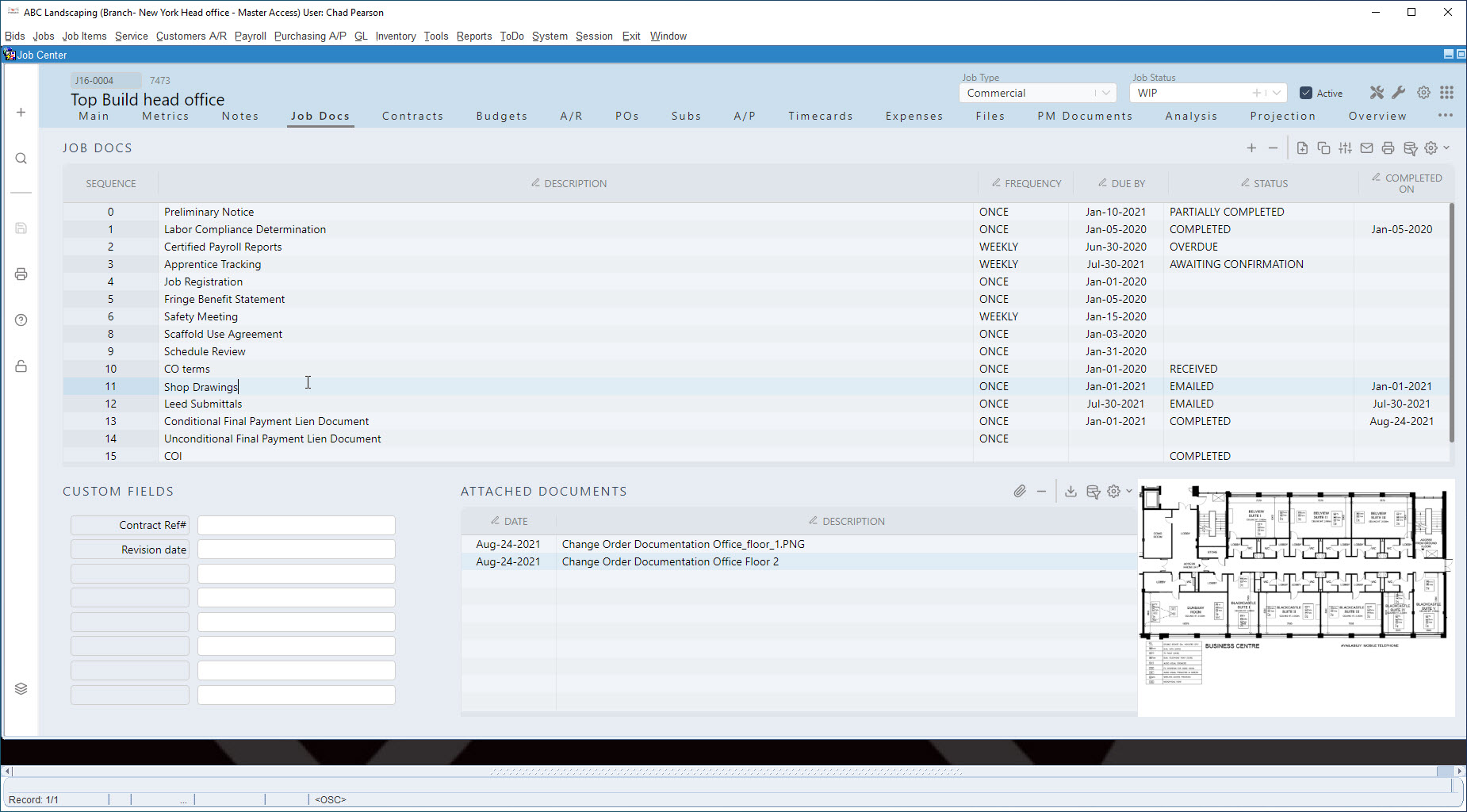
For example, the above image shows the ‘Job Docs’ tab in Plexxis, which holds all the company standard documents required for a job start-up. If you select one of the items and click on the attached document, you will see a picture of that file. This way, you don’t need separate file folder systems. Everything you need in terms of documents is stored within the job.
What are Digitized Workflows?
Digitized workflows are much better than paperless. They’re not as good as team cohesion but much better than paperless because the information within the forms or pictures is usable elsewhere in the product life cycle.
Here’s an example using an RFI (Request for Information). Click on the ‘View’ button next to one of the RFIs, and you will see the RFI created by a foreman on the field using the mobile app. To see the same information from the project manager’s perspective, select the job from the list on the left side of your screen and go on the ‘PM Documents’ tab. On this tab is where all the documentation created as the job progresses comes to this one, single repository for the project managers to act upon. Here you will see the same RFI that you viewed earlier. If you click on it, you will notice that the data within the form auto-populates the RFI.
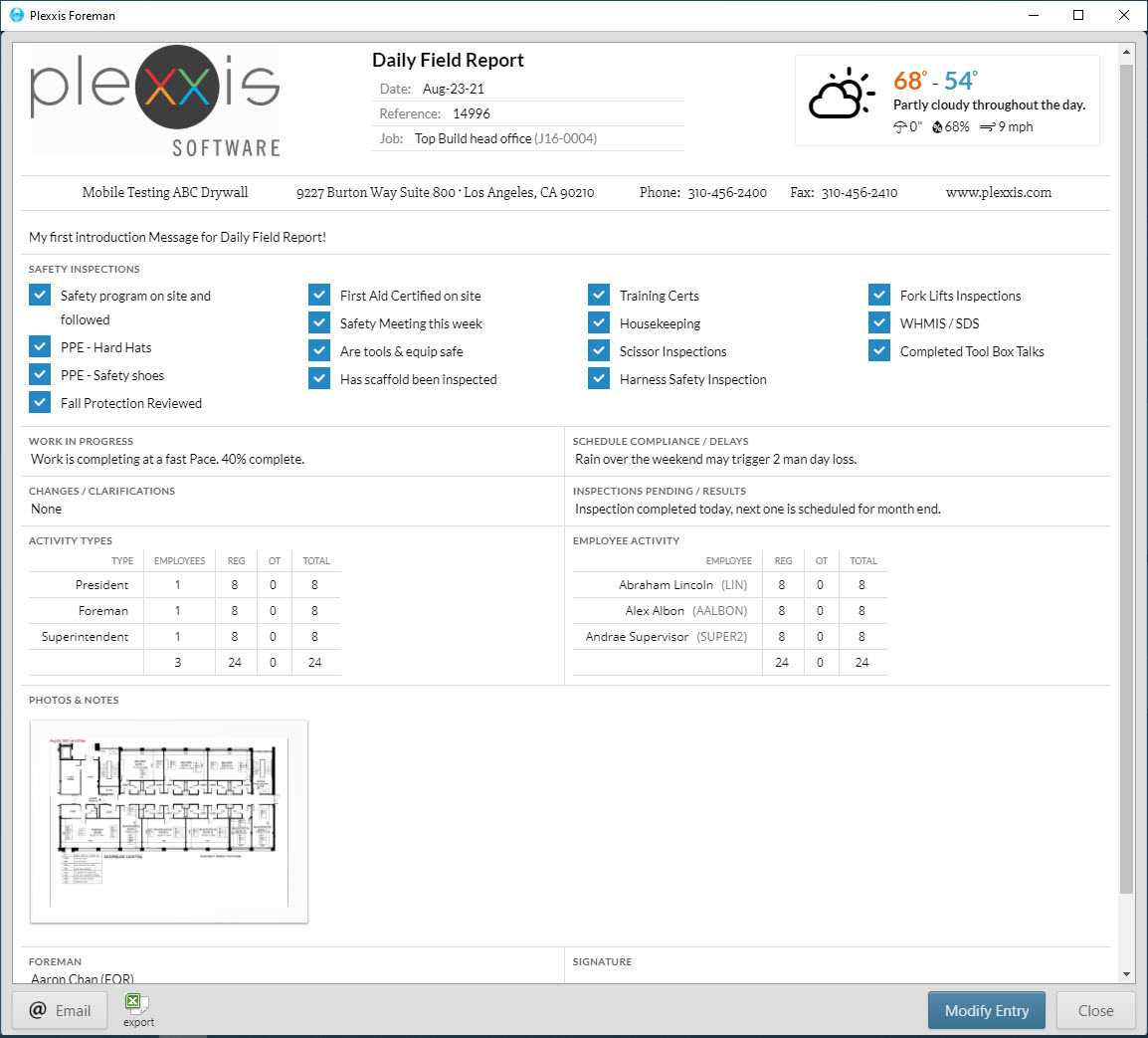
Another example of digitized workflows would be a basic foreman daily field report. If you look at a foreman daily field report that was created on the app, you’ll notice that time records are already populated in the report. The foreman didn’t have to enter these time records; they’ve already entered them in the timecard app. Because we have connected workflows and the information is digitized, the information automatically flows into this form, so the foreman doesn’t have to duplicate that data entry.
What is Team Cohesion
Here is where you’ve got complete digitized workflows from end to end.
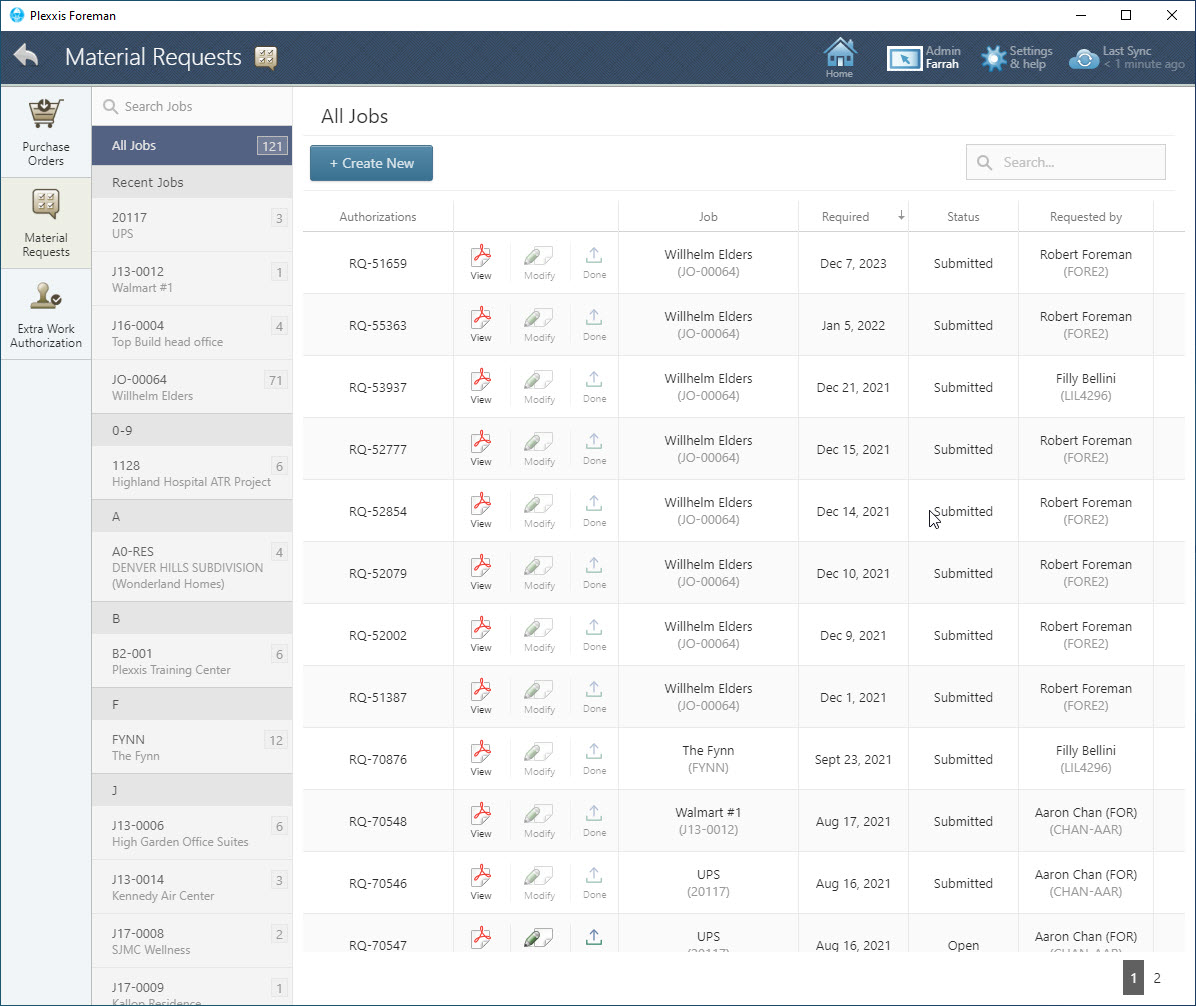
A good example would be purchase order requisitions. A foreman can come in here and create a purchase order requisition right off the budgeted materials or the company-wide database. If you look at a material request, it’s a digitized workflow but full team cohesion. Meaning it is a completed digitized workflow. If you go to purchasing and open an ‘open’ purchase order and go over to requisitions, you’ll see that same requisition here. If you want to add this to the PO, select the items you want to add and click the ‘Add Selected Items’ button. The app will automatically start applying the pricing set for that specific job coming off the job’s special pricing information.
Team Cohesion requires that the upstream workflow and the downstream workflow are fully complete and digitized. This is where contractors can be misled. Even on Plexxis, where we have a live connection between bidding, field & finance, not even all our workflows are complete. If a customer builds a custom form and wants a complete workflow, we will still have to build a custom bridge to the downstream workflows they wanted to complete.
To protect yourself, if the salesperson starts using the terms “complete digitized workflows” or “full team cohesion,” test it out for yourself. Take the forms and follow the data right through to the end. If they can’t show it in the demo but still say they can do it, there are two things that you can do. You either get references from other contractors who have got the completed workflows embedded in their system or get it in writing on the contract.
Project Documents
It may be that when you think of virtual reality, images of a gamer come to mind. Augmented reality might have you thinking of a theme park ride. The truth is, while there are other applications, both virtual and augmented reality are bringing a whole new level of success to the construction industry with widespread applications that are modernizing how we build homes, businesses and retail or industrial complexes.
Modernizing construction in the 21st century will lead to a variety of benefits including improved health and safety of workers, fewer costly errors and project efficiencies that will ultimately save both time and money. There’s nothing “playful” about VR and AR when it comes to construction, instead it’s all about achieving a whole new level of success!
Helping Modernize Every Step of the Way.
From the moment an architect first envisions a building, through every step of the design phase, up to and including marketing the vision to the end user, both VR and AR play a pivotal role. Here’s a recap of just some of the ways you should be using these tools, along with wearable smart devices, on your next construction project.
In Preproduction – Sharing the Vision, with your team and with Customers
Before a shovel ever hits the ground, help your team see the same vision you do by incorporating virtual reality into your design process. Whether you refer to them as diagrams, drawings or blueprints, not everyone is skilled at translating 2D to 3D and often (when it comes to new homes and condos for example) the end buyer simply can’t “see” the finished product. Help seal the deal with potential buyers and/or investors by providing 3D virtual tours of your proposed property.
There’s simply no better way to market your project than by bringing that project to “life” right before their eyes. Full immersion “into” a project will also help to eliminate any misunderstandings over actual design details and can allow for requested modifications to be made to plans while it is still cost-effective to do so. This is also a handy feature when it comes to renovations – ensuring homeowners know and understand exactly what they’re getting.
BIM – Building Information Modelling
BIM is where a series of images are collected through technology like 3D laser scanning and drone imagery (we talked about drones in construction last month and you can find that blog here) to create a three-dimensional model. Bringing a vision to life enhances collaboration and communication between the architects, developers, the construction team and the end user in a way that can only be achieved through the use of virtual reality 3D technology – where everyone is seeing the same thing at the same time.
Before and During Construction – Eliminating Costly Errors
Collaboration is key in construction. With so many contractors involved on a project, coordinating the efforts of everyone toward the end result is one of the biggest challenges the industry faces. Both VR and AR can play a role in allowing key players to “see” beyond the surface and identify a problem, perhaps before it’s even been installed. What if contractors are working from an out-dated set of blueprints? What if there is a communication issue between job sites? Just these two factors alone can lead to real time delays, costing you both money and time. AR enables workers to view schematics (let’s say plumbing floor plans for example) overlaid on top of building design, in real time, so that problems with design might be identified. Concurrently, all of that information is able to be collected, also in real time for accurate and relevant feedback to be provided promptly to everyone from the design team to lead foreman.
Augmented Reality Glasses – Seeing the Future in Real Time
Speaking of augmented reality, you can eliminate the need for finding a surface to lay out blueprints and trying to compare drawings to what you are seeing in real time. Smart glasses will take photos of what you see, record video of your commentary and relay that information back to design teams to address and make corrections in calculations or design before costly mistakes are made. Improved oversight might even free up your management team to then be able to oversee several projects at once.
Gaining efficiencies in planning and improving processes throughout the construction phase are just two of the many reasons to consider augmenting your construction team’s onsite tools with VR and AR technology. But there’s a third reason and this one has everything to do with safety while still helping you operate more effectively. Wearable technology is changing the way we build and it’s helping to put safety first.
Here’s how:
Wearable Technology and Safety First – Putting Workers at the top of the Priority List
Training
VR technology can be used to actually enhance operator training before they ever hit the job site. Practicing on large construction machinery, on the job site, isn’t ideal but training in virtually life-like circumstances is. In turn, that leads to enhanced safety on the job site too.
Wearable technology
Wearable technology increases efficiencies and improves safety by reducing the number of people on the job site in the first place. Just one person on a construction site can be the “eyes” of an entire team meaning fewer onsite visitors and reduced potential for accidents.
Smart technology
Smart technology includes a variety of wearable items that will monitor everything from a worker’s health to the health and safety conditions of the job site. Some recent data indicates that the use of wearable technology has led to an increase in worker satisfaction (by as much as 8% in one study) and that its use may also lead to a reduction in insurance rates.
RFID security tags
RFID security tags are already in widespread use to help control who has access to work sites and monitor where your employees are and the flow of traffic both on and through sites.
Smart Helmets
Smart Helmets can monitor vital signs and detect fatigue as well as alert emergency personnel to worker’s locations in the event of an accident.
Exosuits
Exosuits, not quite like the movie hero Iron Man, but wearables – dedicated to specific areas of the body where workers typically experience fatigue or injury – can help eliminate or reduce both. Currently on the market are products for shoulders, the back or legs and this type of equipment helps reduce strain from heavy lifting, helps with repetitive motions, prevents excessive fatigue and decreases the chance of injury, all while reducing stress on the body.
Smart boots & smart bands
There are even smart boots and smart bands now on the market that have many of the same applications as those already listed above. There is now a particular smart clip wearable device that not only monitors worker fatigue and possible health risks, but also allows the worker to signal for help at the push of a button. It can even allow the construction site manager to alert all workers at the same time of an emergency such as a severe weather-related warning or about an accident or fire incident requiring immediate widespread site evacuation.
There’s no doubt that wearable technology, augmented reality and virtual reality are modernizing the construction industry, enhancing everything from the customer experience to worker safety. Building success through the use of technology formerly associated primarily with the gaming experience is changing the way construction builds the future, bridging the gap between past and present best practices. If you’d like to know more about the future of construction or have specific questions about Plexxis Construction Management Software, call or email us anytime.
* Brought to you by Plexxis Software: Offering software solutions for the construction industry that integrates cloud, mobile and on-premise software to improve and enhance team performance.
The Truth League
“I’m here to fight for truth, and justice, and the American way.” This was Superman’s famous slogan, created by two American writers at the height of World War II. Over the years, the “American way” part has come and gone, but the fighting for truth sentiment has remained a central theme… through hundreds of comic strips, and scores of popular films. Its central to Superman’s ethos.
At Plexxis, our people also fight for and stand guard for truth. Reflected in our motto “#buildTRUTH”, we do so in a myriad of ways – from honest and open relationships with our teammates, to transparent communications with clients.
And while “truth” is universally embraced at Plexxis, the unique interpretation that each of our team members brings to it, serves to further strengthen our core belief that success can never come at the cost of truth.
Paul Glinker, lead programmer at Plexxis sees being truthful as a way to avoid mediocrity. It’s integral, as he sees it, to keep everyone on the team honest about their results and performing to their very best of their abilities.
Truthful communication is something that resonates strongly with Jonathan Locke, our client services manager. For him, the fight for truth begins with transparent and frank dialogues and extends to supporting and helping empower your teammates; something you find happening everywhere at Plexxis.
“The biggest one for me is probably open and honest communication,” he says.
“If we don’t know where we stand and we can’t communicate and ensure we’re on the same page. That means it’s not going to go well with the rest of the team. It’s not going to go well with the customers. It’s not going to go well with anyone. That would probably be the sticking point.
Being able to encourage and build up the different team members around you is also crucial. People are going to come in, they’re going to be new and they’re going to need handholding and support. Anyone here in the building is going to be able to do that whether they’re even in your department or not. You’re going to see people from implementations and support working alongside each other, building everyone up.”
Jeni Mitchell, our dynamic director of client advisory services at Plexxis sees the pursuit of truth as a burning desire in the heart of everyone at Plexxis team. She cautions newbies, however, to keep expectations genuine and realistic, as the journey to truth is a long arduous one. Humility too is a core tenant of our Truth League.
It’s that sense of humility, coupled with a spirit of collaboration and helping others that matters most in the Plexxis truth league.
Director of Business Development Chad Pearson was the inspiration behind the “#buildTRUTH” moniker at Plexxis. To him, anyone who joins the Plexxis team must possess great personal values – including being truthful to themselves. And beyond that, they must be an awesome team player.
“The people that do well here are the people that have that sincere desire to help others. It’s that person who, once they finish their tasks, they look to see who else needs help. That is the type of person that shines here,” says Chad.
“When you’re on a team that is expected to perform, and there’s pressure, you may not succeed if you fail to possess our core values. It really gets down to the character of the people themselves — and whether or not an individual can withstand and perform in a high-pressure environment.
Most importantly, you must possess the type of character that allows you to work well with others. Alone, you will fail, but together under pressure, we do very well. That’s really one of the things that we look for — it’s not necessarily about the person’s competence alone. It’s about how well they work with others.”
Great teamwork and succeeding together is the great outcome of ‘building truth’. Ali Abbas, lead programmer ERP, speaks about the spirit of trust he enjoys with his Plexxis team that fuels their joint successes.
“…All of my team members have that same mindset where we help each other out. We cover for our each other’s weaknesses and play to our strengths, he explains.
“That environment sets up a mindset of collaboration because everybody’s willing to strive for success together. Each time the team member equates their own success with the success for the overall team and subsequently the entire organization. Because of that, I can give them the flexibility and discretion to make up their own objectives and define their own objectives so that they can tackle problems and issues the way that they need to, because I know that I have their trust. They know they can come to me if, priorities ever need to change, or if they need to discuss any shifting milestones.
The atmosphere is one of shared trust, shared risk and shared success.”
Certainly, that “fight for truth and justice” is something that fires up Plexxis CEO and Co-Founder Chris Loranger. His passion drives not only truth, but the innovation and extraordinary teamplay propelling the company forward as a force to be reckoned with.
It’s clear that “truth and justice” are alive and thriving at Plexxis Software today. Those core values of trust, teamwork and “fighting the good fight together” is why our people at Plexxis are so inspired, so fulfilled and fired up about their work each and every day.
Think you have the right stuff to join the Plexxis Truth League?
CHANGE ORDERS, CONTRACTS & SUBCONTRACTS IN PLEXXIS SOFTWARE FOR SUBCONTRACTORS
Contracts & Subcontracts
Most subcontractors must use separate systems and spreadsheets to manage their change orders, T & M tickets (time & material), billings and subcontracts because they use generalist software that was not designed around the VUCA (Volatile, Uncertain, Complex, Ambiguous) nature of the trades. Fact is… if you re-label generalist software as specialist software, it does not make it work for specialists. We fix this problem.
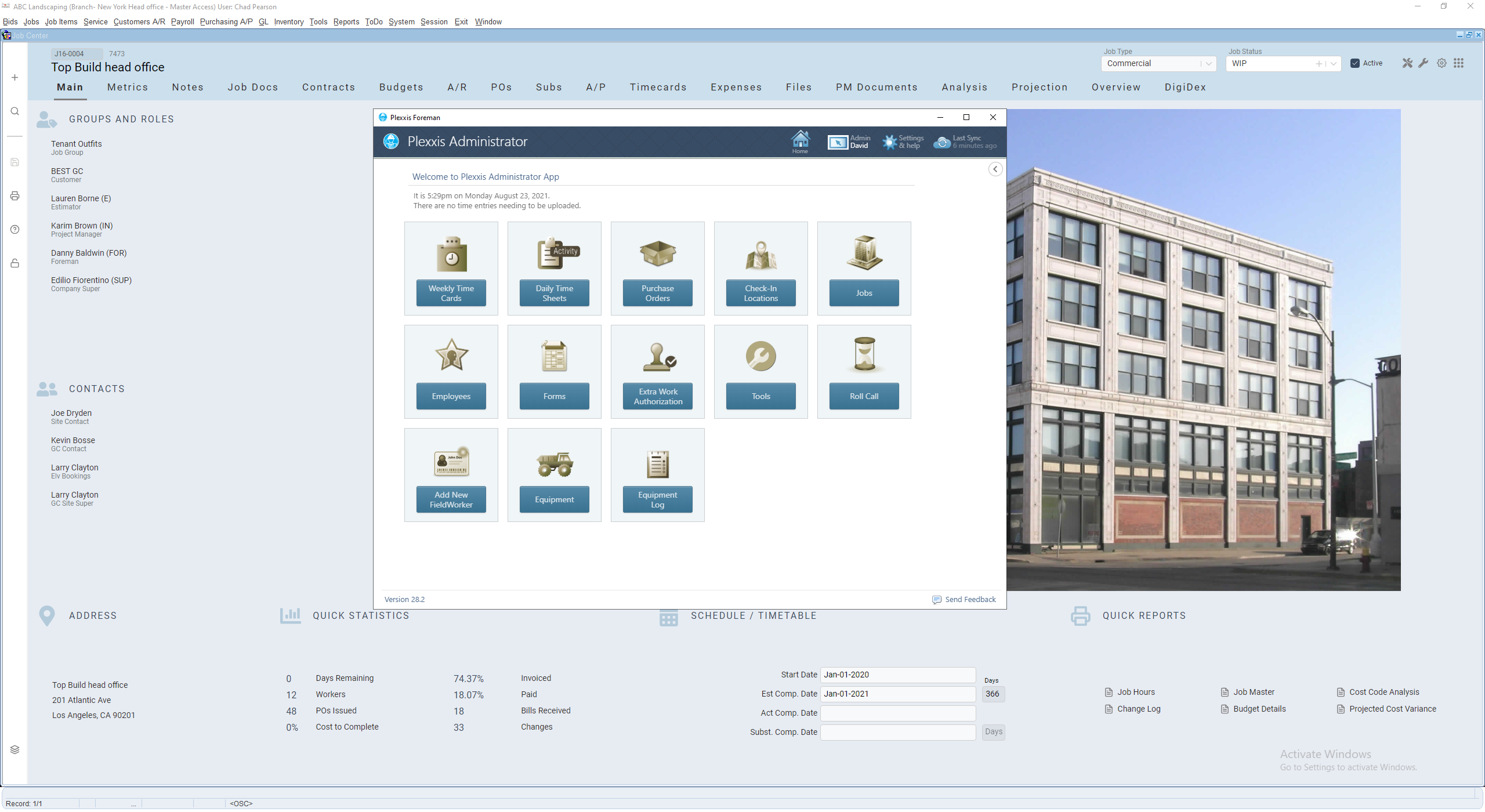
On this screen, you can see the Plexxis super app for the Field. All ten apps are in one spot, so we eliminate that app fatigue that the field is feeling now. What is most important to know about these three products is that we have a live connection between Bidding, Field and Finance. You do not have to struggle with any integrations, imports, exports, or anything. We take you beyond integration right out of the gate.
Under the “Analysis”, you will see our multi-trade, multi-company, multi-location solution, making it easy to run a job, in any trade, all from one spot.
The “Subs” tab is where you manage all of your subcontracts. Everything from the actual contract itself with your subcontractors, all the pay applications, insurance certificates, liens, etc.
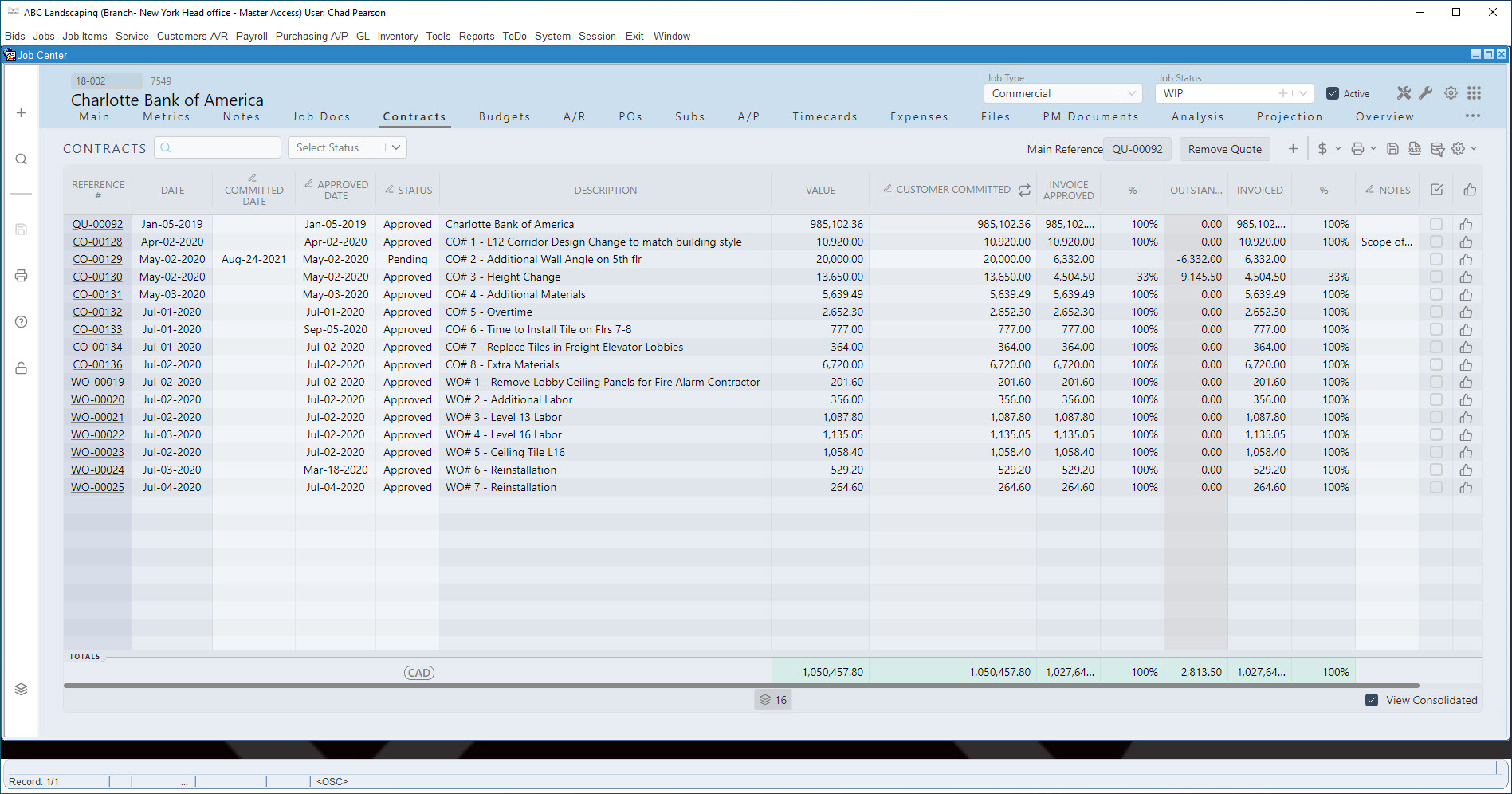
The ‘Contracts’ tab is where you will find the single repository for all your contracts, including any changes that happen on the job – regardless of where those changes are coming from. If a change is coming from your estimating system or WinBid, it will populate this contract screen. If it is coming from a T & M ticket or an extra work order ticket that is done in the field app, it will come into here as well. Depending on your company’s pre-sets for changes on each job, the tickets will be automatically priced and then packaged up with all the supplementary documentation to help you get paid so you can send it to your customer. As you can see in the above image, the first item is your original contract. Below that, you’ll find all the change orders and T & M tickets or extras that have been generated on the job as it’s progressing.
When starting a new contract on the job, you will see options to choose the type of contract you want to create. [We will show you how to complete or price out a contract in a separate blog.]
You can add multiple change orders or T & M tickets or add extra work order tickets to a single change order. If you want to view that from in a consolidated fashion, you only need to click on the “view consolidated” button.
For change order workflows, you don’t need Excel at all, period. We manage all status levels from ideation to approval inside Plexxis. Accounting will have complete visibility of every single change order regardless of the status.
Want to view the change order log? Simple. A couple clicks will take you to screen below. If you wish to mine it in different ways or change the perspective, the “Show Advanced’ button will present even more options.
Remember, Plexxis has a live connection between bidding, field and finance. From the field’s perspective, when the foreman goes to their ‘Jobs’ view, the labour and material breakouts will automatically be impacted by change orders. You’ll get a live labour breakout on the job with remaining hours and remaining man-days. Because of the live connection, the change orders are impacting the budget with pending and approved change orders. If you’ve got those pending agreements where you’ve started the work in the field, but they’re not approved yet, they still impact the budget, but they don’t hit billings. The same is on the material breakout as well. It’s a live material breakout, including pending and approved change orders.
If the foreman wants to see the change orders themselves, they can go into the field documents, and they can see every change order that has been created, but they will not be able to view pricing. Pricing is removed on every document that goes into the app. They can see the labour and materials that have impacted their live labour & material breakouts.
We recommend watching the Super App video to see how easy it is to create a T & M ticket or extra work order authorization in the field. You’ll not only see how simple it is to do that and get the customer’s signature on the T & M ticket on the iPad in the field, but you’ll see the complete connected workflow right through to accounting.
If you open a progress draw, you can go into the extras tab and automatically add all approved change orders at the click of a button. You can even go in and select pending change orders and add them to the pencil payouts, so the GC knows what’s coming down the pipe and creating the actual invoice itself is just as easy.
Contracts & Subcontracts
We’re seeing exponential growth in the use of both robots and drones in the construction industry and with good reason. Drones help provide the “big picture” to everyone from developers and architects to the construction site manager or foreman. Robots, while still in their infancy, show a different kind of promise, potentially reducing repetitive strain and other labour related injuries and in reducing costs through increased efficiencies.
Technology is changing the construction industry and it’s safe to say we’re now constructing the future with robots and drones. Here’s how:
Technology is Changing
Drones are a multi-purpose tool enabling everything from site evaluations to regular and ongoing site progress reports. The information they provide is invaluable; allowing for quick onsite immediate assessments and where necessary, for adjustments and changes to be made before small mistakes become bigger ones. Drones can capture consistent images over time, layering those images over one another to highlight problems and creating opportunities for both inspections and for measuring progress.
Drones also:
Aid with surveying property, augmenting the work of or eliminating the need for site surveyors, reducing costs and virtually eliminating human error.
Can assist the process of creating 3-D models and/or overlaying images taken on building design drawings to swiftly address any discrepancies.
Can be utilized to safely inspect progress on a construction site, particularly in hard to access locations. Think rooftops for example. Drones are a safer way to “get to the top” for visual inspections.
Offer both thermal and visual images for a more complete picture.
Particularly useful on large, complex projects that may cover great distances. Think bridges, highways, pipelines and other similar large-scale project applications.
Provide remote access to a site for off-site assessment by engineers, planners, developers and/or to relay useful information like GPS co-ordinates.
Affordable.
Can save money and improve safety. Requiring only an operator, who can pilot from a safe vantage point, risks of injury or mistakes in calculations are minimized and exposure to hazardous environments reduced.
Robotics “lend a hand” to the construction industry.
In much the same way as drone technology, robots too are changing the way we design and build the future. Becoming a more “regular” feature on the construction site might still be some distance in the future, but robots are slowly making their presence felt in a number of ways. In fact, robotics is impacting the industry, even before they arrive on the job site as they are being utilized in the manufacturing processes of the many services that in turn serve the construction industry.
As well, with ongoing labour shortages a chronic problem in construction, some companies are developing humanoid robots that will be programmable to complete repetitive tasks requiring relatively little skill – freeing up labour for more complex tasks while reducing the high personal and professional costs of repetitive strain injuries.
Outside the use of drones, probably the most likely place you’ll first encounter a robot on the construction site is in the use of driverless technology for large equipment. Dozers, Excavators and ATL’s are each already being used to dig trenches, excavate foundations for homes and to level soil. Remote control technology is being developed that allows driverless semi-autonomous vehicles to roam construction sites collecting data or delivering instructions. Data collected by these robots can be instantly uploaded to the cloud allowing for corrections to be made in faulty design or installs before costly fixes become necessary.
While the use of drones and robots in construction may seem futuristic now – it’s clear they are playing a more pivotal role each day in constructing the future of tomorrow.
* Brought to you by Plexxis Software: Offering software solutions for the construction industry that integrates cloud, mobile and on-premise software to improve and enhance team performance.
From Spiderman and the Green Hornet to Batwoman, every superhero has an origin story: A gripping tale around the genesis of their powers and how he/she became driven to fight crime. Often these stories are inspirational. They paint a picture of how an individual can overcome adversity, seize on opportunity and ultimately triumph – no matter who they are or where they are from.
A lot of us love these origin stories because they demonstrate the precise moment when an ordinary person transforms from being ‘just like us’… to becoming better, faster, stronger. In fact, we draw a heap of inspiration from these rousing tales. Could we ever become superheroes too?
Certainly, the superheroes of Plexxis have their own unique origin stories. No-one arrived here as a cookie cutter tech expert, or a construction industry software developer. In fact, most of us have been that “just like me” person… able to step into their superhero powers upon joining forces with the Plexxis team.
Every one of our colleagues has a fascinating background – an unexpected story. Everyone brings something extraordinary to the table here at Plexxis: a skill, talent or a disposition shaped by a myriad of life as well as work experiences. Listen to one of our Full Stack JS Developers, Tristan Boyd –
This commitment to hiring ‘outside the box’ also extends to our entry level individuals. Take the case of Ali Abbas who joined Plexxis right after school:
“Honestly, I didn’t even know about Plexxis before joining. My brother was actually doing a high school co-op there and, once I graduated from university, he suggested that I apply.
“In my initial interview it was pointed out that I had a lack of experience, and my resume wasn’t very good. They felt, however, that if I was anything like my brother, I would be a great fit. Fortunately for me, I got the opportunity. Fortunately, as well, I turned that opportunity into an amazing career. Eight years later, here I am.”
Chance meetings, Instant chemistry
From chance meetings at airport bars to connections that go way back, some of our Plexxis people share a long history with the founders. We have great team members who were lured away from other exciting careers to join the company. Such is the story of Paul Glinker, our brilliant programming lead.
“From grade two, all the way until the end of high school, the founders of this company and I were childhood friends. We lost touch. Then, we bumped into each other by chance in a computer shop in Mississauga, says Paul.
They asked me ‘What are you up to?’ And I told them: ‘I’m a video game developer at Rockstar games.’ They said, ‘We’ve started a company and you should come and work for us.’ I thought, oh man, I I’m doing what I love — making games, so I’ve got to stay on that path.”
“But they kept on me over the years. They would be like, ‘Hey, so, we’re growing, and we need a guy like you.’ It turned out, they were having a challenge developing a digital takeoff application… these really large, blueprint drawings that they needed to display and manipulate on a computer screen.
“They figured I had the background to tackle this because I’m doing video games. So, they asked: ‘Maybe you could take a crack at it?’ I thought, wow, this sounds like a chance to actually do something productive with my skillset!”
Another interesting story comes from Plexxis’ current legal counsel, Eric Nguyen. He joined Plexxis at a time in his career when, although still young, he was ready to retire from law. Plexxis, however, was an opportunity just too good to refuse.
“Chris (the CEO of Plexxis) and I lived at the same, condominium complex and were both on the condo board of directors. Over the years, I had helped Plexxis with their corporate work and guided them on matters such as how to structure their business. That was pretty much how the relationship started. I’m actually very proud of Plexxis because I’ve seen them grow from a start-up software company to the success they are today. To see them where they are now and knowing that I helped them and guided them makes me very proud,” says Eric.
“In 2014, when, I decided to retire. Chris just asked if I would, like to just pop into the office once or twice a week or whatever — just to have a presence at the office. So, so I accepted, so that was how it started. And today I’m still here as in-house corporate counsel for Plexxis.”
From milking cows to making software
At Plexxis, great origin stories begin with our founder himself. An MIT grad? Software whiz kid? Nope. CEO Chris Loranger started his career as a dairy farmer in northern Ontario – until a startling revelation caused him to change career paths.
Ultimately this startling discovery led him to launch Plexxis with his cousin, Jason Fraser.
Most notable among origin stories are those who come to Plexxis, not because of chance meetings or past connections with the leaders, but because of that special something. There are some individuals who simply shine out with a unique potential that we find impossible to ignore. Like Farrah Merchant, our programming coordinator:
“I was new to the country and a new mom. Plexxis just came from somewhere into my lap. It was a chance that I wanted to take. Actually, more accurately, it was a chance that Plexxis took with me. Now, it’s going to be like close to seven years and I don’t regret a single day. I’m just glad that I took this chance, and they did their part for me. After seven years, I’m not wanting to look for something new. I just can’t be more thankful to have found my career here.”
Not all our Plexxis people bring dramatic or earth shattering stories. But they do bring THEIR stories. And the way we seek out people with interesting backgrounds and wide-ranging experiences –and bring them together on winning teams is pretty magical. That’s really at the heart of our success story. It’s all about SUPER-people. Plexxis Superheroes.
What’s your story?
Do you feel a sense of destiny, drive – or simply an urge to join forces with an amazing team?
Every superhero has their special “wheels”. Trademark “hot rods” that define and exude their image, style, and special powers. Certainly, there’s no more iconic supercar than Batman’s Batmobile – both a heavily armored tactical assault vehicle and a custom-built pursuit and capture vehicle used to fight crime.
Iron Man, one of Marvel’s most popular superheroes, also loves his ‘souped up’ drive. He has many of them, in fact. Although he’s equipped with special armour that gives him flight, billionaire playboy Tony Stark possesses a garage full of exotic fast cars. Interestingly the classy and uber cool Audi R8 has become Iron Man’s trademark car ever since the blockbuster 2013 film.
But what about Plexxis? After all, this is a superhero workplace, so what automotive brand would be the best match for our persona?
Which super cool vehicle would epitomize the culture of an innovative and unstoppable software company?
To get different perspectives on what that car would be, we asked a group of Plexxis insiders and received some interesting replies.
Some equated Plexxis with that famous luxury car:
Our national sales rep said “Plexxis is a Ferrari… based on the speed at which it operates, the velocity of team collaboration, and the efficiencies that we’re able to capture. It truly is top of line”.
Chad Pearson, director of business development agrees:
“Why do I say Ferrari all the time? We are the high-performance choice, like a vehicle that comes at a cost, but you also get all the added value we bring,”
For others, like resource manager, Fiona Locke, it wasn’t the prestige… a number of high-end features that typified the Plexxis car; It was toughness. They were inspired to choose a vehicle based on power, durability, and heavy-duty work ethic:
Tristan Boyd, our Full Stack JS Developer took a similar view, but chose an even more iconic workhorse:
“John Deere tractor. Not attractive but hardworking. OK… well not a car exactly but it’s unassuming. No flash. No bullshit. Yeah. John Deere. That’s my vote.”
Perhaps the most creative and lively analogy for the Plexxis car came from Jeni Mitchell, director, client advisory services:
As comparable and vivid as these choices are, there was one car brand that shone out. A majority of Plexxis people agreed that this one highly advanced automotive of the future was the company’s real doppelganger.
“I would say Tesla,” says corporate counsel Eric Nguyen.
“Not because it’s, an electric vehicle and all that. But because its founder Elon Musk is a disruptor. Automakers didn’t want to produce electric cars – but they HAD to because Elan created them. Now they all have to follow suit,” he says.
Tesla is disruptive and Plexxis is the same because our systems incorporate everything from estimation to accounting. Prior to us, everything was separated and segregated. We disrupt the industry, and we continue to do it…We’re innovative…just like Tesla.”
CEO Chris Loranger also concurs that the Plexxis super vehicle would definitely be a Tesla:
“At the end of the day, we’re coming out looking at the world from a different point of view and saying: ‘Forget the status quo.’ What if we just retooled everything slightly differently, took longer to make it happen… but the end result will be much better?”.
Lead developer Paul Glinker agrees that it’s Plexxis’ pioneering spirit that drives the comparison to Tesla:
“It could be the Tesla truck, but without the defective windshield 😊 It could be any of the cars. But not just because Tesla is the most technologically advanced car company in history. It’s because they’re trailblazers. They set the bar. They define what’s possible. That I think, is the same for Plexxis.”
Ali Abbas, lead programmer ERP has the final word:
“Tesla. We have their dreams. Those dreams definitely seem daunting at times, but we’re going to change the world and we have been changing the world.”
Certainly, these are all vastly different but revealing car brand comparisons. Why such a wide variety? Maybe this simply speaks to what matters most to different individuals – and how different people at Plexxis love different aspects of the culture? After all there are many things that uniquely define the Plexxis experience: from innovative thinking and collaboration to hard work and awesome perks.
Whether you see us as an innovative Tesla, a luxurious Ferrari, a tough truck, – or a fantastical magic bus – once you work for us, we’re certain you all will agree about one thing: Plexxis delivers a truly amazing ride you’ll be hard-pressed to find anywhere else.
Think you have the right stuff to join the Plexxis Truth League?
Simple Tactic To Prevent Danger of Distracted Workers
By: Chad Pearson
A distracted worker is a dangerous worker, especially when workers work in dangerous environments. Simple cue words and mantra such as “harm prevention requires attention” can make a difference ONLY IF leaders overcome the monstrous level of resistance that crush efforts to improve performance.
The monstrous level of resistance to performance initiatives is now amplified with covid constraints. Construction sites are chaotic environments managed by workers who are enduring their own level of daily stressors and distraction. Adding covid constraints to job sites and personal lives exacerbates the impact of daily stressors and decreases attention which invites disaster.
There is a strong solution to this at the end of this article but first, I need your attention so I can explain 3 challenges that need to be understood in order to execute the solution successfully.
Stay with me here…
Challenge of attention: The evidence that we live in the “Age of Distraction” is insurmountable. If you doubt that statement, simply search the term and you’ll be overwhelmed with reputable studies.
At Plexxis Software, we teach a 20-session course on high performance and overcoming distraction. Cue words and mantra is 1 of the 20 classes…The irony here is that we would love to share all 20 parts, but current attention spans would prevent learning. In fact, despite performance and safety being critical to 100% of contractors, 38% of readers have already stopped reading and only 50% will read up to 50% of this article.
Even worse, only 4% – 6% of readers will likely execute this tactic, despite the fact it is simple and effective. Lack of attention is a core problem creating risk and preventing performance.
A solution: Mandate tactics that improve attention. Cue words and mantra is one of those tactics as it helps trigger attention to specific behaviors and actions that help the mission.
“Speaking of attention, congratulations to those who are still reading. You’re already in the top 60% of those maintaining attention. Let’s see who makes it to the top 4%”.
Challenge of VUCA: VUCA is a military acronym for Volatile, Uncertain, Complex and Ambiguous. It characterizes difficult environments that often have risk of bodily harm, death and critical cognitive stress.
The VUCA nature of construction makes it more difficult for people to learn and execute new skills compared to safer, more straightforward environments.
A Solution: Cue words and mantra help simplify behaviors and actions to a level that makes it easier for people to make good decisions and take the right action, at the right time in scenarios they were trained in. Mandating the daily practice of the tactics below will help successful execution.
Challenge of the human brain: During chaos and critical stress, the brain is often controlled by the limbic system, the emotional part of the brain responsible for freeze, flight or fight responses. The limbic system reduces performance so much that skills learned in basic training and certification courses can end up being as effective as an umbrella in a hurricane.
A solution: Cue words and mantra can help people suffering the impact of critical stress on the brain, trigger the proper response needed in scenarios they were trained for.
“Congratulations again…you’re now in the top 50% of those maintaining attention. Can you make it to the top 4% who execute?”.
Let’s dive into the solution…
Top performing professional fighters, military and police are required to make decisions faster than most humans can consider options in VUCA scenarios. Cue words and mantra condense complex concepts and solutions for specific scenarios into a descriptive and memorable communication that triggers good decisions and actions.
Examples of cue word mantra in professional MMA…
When a fighter is in combat and their coach sees an immediate opportunity that might only be available for a moment, the coach will communicate the ‘learned’ cue word so the fighter can execute proper technique fast enough to win the moment.
Examples of cue word mantra in Police work…
When an arrest escalates into a violent confrontation, well trained officers use the mantra ‘secure and scan’ to remind them to look around for other assailants when they have moments of control in the confrontation.
Another mantra well trained officers use is ‘change your mag when you can, not when you have too’. This helps ensure officers do timely reloads of their firearm during gunfights to maintain tactical advantage.
Example of cue word mantra for safety in construction…
A good mantra for safety on the job site is ‘walk & scan’. The intention of ‘walk and scan’ is to have all workers scanning for safety hazards each time they are walking on the job site.
All too often, workers ‘zone out’ or use their phones as they walk on or off the site, get materials or go to the washroom. This lack of attention to safety can be catastrophic in VUCA environments. Walk and scan mantra is a simple tactic with the massive potential of turning every worker into a safety officer.
Let’s get real…
Cue words and mantra is only one of many performance tactics, but it is the simplest and it saves lives. We challenge all contractors to have the leadership and attention to execute to perfection.
If your jobs look good until 80%-90%, and then reality hits hard…READ THIS.
By: Chad Pearson
Do your projects look financially fit until they reach 80%-90% complete, then the wheels fall off the cart?
Did you invest into clever excel sheets, custom reports, consultants and technology that connects the field and office, yet still have poor job visibility?
If so, this article is for you.
It may help to look beyond technology and process, to the human element, and consider a drastic shift in culture as a solution to unreliable data.
People touching data is likely the cause of the distortion.
There are 1000’s of ways humans distort data but we’re going to focus on only two that make it almost impossible to get accurate data, regardless of how good your technology is.
The two human trends are Price’s Law and our increasing addiction to distraction.
Problem #1 is Price’s law, which says that 50% of the work is done by the square root of the total number of people who participate in any project. It’s an unfortunate reality that is accurate more often than not in companies.
For example, if your company has 25 people involved in admin tasks, approximately 5 people do 50% of the work. If your company has 100 people, only about 10 people do 50% of the work.
So as companies grow, the number of people who underperform grows exponentially. This lack of performance and care destroys the integrity of data collection.
Problem #2 is our growing addiction to distractions. Productivity expert, Chris Bailey, has shown beyond doubt that the barrage of distraction through our connected devices overstimulates the brain so much that attention spans can shorten to as little as 40 seconds. In short, more people are becoming addicts of distraction and less CAPABLE of being productive (even if they sincerely care about company’s mission).
This results in a growing risk of people lacking the attention to detail needed for quality data collection.
If both of these trends exist at in your organization, they are likely at the center of your unreliable data.
The solution
Unfortunately, it appears that data will be distorted as long as humans handle data. The only true solution will likely be when technology takes full controls over data collection.
As we all wait for technology to evolve, we recommend a shift in culture.
The following are 3 steps for building a culture of truth and transparency that fosters the highest levels of productivity and quality in data capture.
That may sound simple, but remember, truth hurts! If you want a culture of truth, prepare for pain and sacrifice.
Let’s begin…
Step up or step aside…you decide:
Step up:
If you decide to step up as a leader, get ready to invest more time than anyone else and lead by example. You’ll need to start saying no to things in your life that do not align with the mission so you can stay focused on changing your culture, and then protecting it after its evolution.
Step aside:
If you’re at a stage in life where you want to slow down and are not willing to sacrifice more than you already have, you should step aside and pass the torch to your replacement. Consider part time roles such as a board member or advisory as your wisdom and guidance will be invaluable.
Leading cultural change is more than a full-time position, it is an ‘all-the-time’position so you should decide if you want to step up to the challenge, or step aside and help mentor an emerging leader become the change the company needs.
Choose the core, and no more:
If you see signs that your company is infected with price’s law, identify the core group of people who do approximately 50% of the work, and then evaluate which people in that group have the integrity needed to build a culture of truth & transparency.
Note: Some people may have great work ethic and/or talent, but terrible integrity. Those people should not be included in the core group.
After identifying your core group of talent who possess the required integrity, bring the group together and define the new culture and develop a strategic plan to create it.
NOTE: You may need to hire a professional in this area to complete this task effectively.
Courage to slow down, so you can speed up:
Once you have a plan in place, it’s time to pony up and execute. You’ll need to make decisions that most people do not have the courage to make.
Here are some examples:
Adhering to unforgiving policies around addictions with technology and distractions (addictions that you might even have yourself and will have difficulty overcoming).
See Chris Bailey’s book on productivity for ideas on great tactics anyone can use to improve in this area.
Begin coaching people outside the core group and set strict deadlines for them to change patterns of behavior that detract from the cultural shift…
NOTE: The tough part will be slowing down, so you can speed up by firing those who do not change their patterns of behavior, regardless of how talented they are, how much they produce or how bad you need them.
Consider the fact that every day a leader allows someone, whose values are not aligned with the core group, to remain on the team is a day that the core group may lose respect for leadership. The NUMBER ONE job of leaders is to serve the team by providing everything they need to succeed while protecting the team from harmful behaviors.
Firing culturally unfit talent may hurt in the short term but replacing those who can’t adapt to the desired culture is the catalyst to building a team where the core performers are the majority, rather than the minority square root of the number of people in the group.
Consider building a culture of truth and transparency through courageous and ever-present leadership. It may be the best way to overcome price’s law and addiction to distractions so you can finally have real time data without distortion and the productivity you have always hoped for.
2 tips for the harsh reality of today’s communication
By: Chad Pearson
It’s an ugly truth that most businesses, relationships and company initiatives fail. And all too often, poor communication is seen as the root cause of the failures.
But is poor communication the problem or a symptom?
Before you answer, consider these 2 facts:
Fun fact 1: Google ‘improve communication skills’ and you’ll find over 1.1 BILLION results that include:
Endless seminars, books and Ted Talks.
Countless companies, consultants, therapists, psychologists who focus on improving communication.
Personality assessments like DiSC and Myers-Brigg as well as endless technology and apps, ALL designed to improve communication.
Fun fact 2: You, along with many people and leaders have most likely invested time and money into one or more resources above aimed at improving communication, yet failure rates do not improve.
So, if that level of effort is being committed to improving communication, and if poor communication is the core problem when things go off the rails, then most businesses, relationships and company initiatives should be making tangible progress…right?
Shouldn’t they be as successful as they appear on social media and in their marketing?
Uh…well…they are not!
Communication is not a problem. It’s a symptom…A giant red flag you cannot ignore.
Does this workplace example sound familiar?
Something goes wrong at work
Poor communication is identified as the problem
Company reacts by:
adding new email templates and/or notifications,
adding more people to emails and notifications,
creating bulletins or newsletters,
adding a new standard operating procedure or meetings to the weekly agenda,
hiring management or DiSC/Myers Briggs consultants,
creating team building initiatives to improve connections
adding more reports and forms to daily task
people feel bogged down by additional requirements and information
Then problems persist and then cycle repeats itself. Making this worse, the above cycle doesn’t solve the core problems, which do not get addressed and erode the very goals that are being pursued.
Addressing symptoms while ignoring core problems is like taking sleeping pills so you can sleep on the floor instead of sleeping in the comfortable bed right beside you.
Fear not. There “can” be a bright light at the end of this tunnel… and it need not be a train coming at you! At Plexxis Software, an integral building block of our internal training is a high-performance course of 20 classes over 7 weeks and one of the 20 classes addresses this problem. Keep reading to learn more.
“But first, if you are still reading, CONGRATULATIONS! You have a greater attention span than 38% of the population. The rest of this article will test that attention span even more, on purpose, as paying attention to attention will prove really fu#$ing important in the solutions that follow.”
To understand the problem and solution better, it will help to review one of the most popular communication solutions from the list above, the DiSC assessment. Some companies experience a significant improvement with their team’s communication after the DiSC program yet, we’re claiming it’s a waste of money.
Why would we say that?
Personally, I have done the DiSC assessment 3 times and observed the same symptoms and core problem each time. At one conference in 2018, an attendee stood up and said “I did this at our company 2 years ago and it was the best thing we ever did. We posted our personality types on our doors and wore badges, so we all knew how to communicate with each other. It works great!”
This glowing reference is similar to others I heard but remember, communication is not a problem. It’s a symptom…A giant red flag you cannot ignore.
If communication is not the REAL problem, then what is the problem?
For this example, Mr. Rogers, AKA Fred Rogers from the television series Mister Rogers’ Neighborhood, which ran from 1968 to 2001, has the answer. Fred was known as an exceptional communicator. The truth is, he simply gave people his undivided attention and great communication was the result.
Mr. Rogers says it best during an interview with Tom Junod:
“Do you know what is most important to me right now? I’m talking to you, so right now you are the most important person to me. Our conversation is the most important thing to me right now.”
Mr. Rogers personified ‘being present’. He was authentically interested in every person he spoke to which enabled him to communicate as humans were meant to communicate. Most people already have everything they need for elite communication, yet most are thinking about other things while they are speaking with people standing right in front of them.
Also, people tend to listen in order to respond rather than listening to understand which erodes the trust in relationships and prevents people from noticing critical behavioral cues which results in poor communication.
Even though we stated that DiSC is a waste of money, for companies with distracted workers and leaders, it’s a very good use of time. Those companies who benefit from the DiSC program realize success NOT because DiSC’s outdated pseudoscience from the 1920’s is magic, but because the distracted workers start paying attention to each other.
Poor communication in this case was a symptom. Poor attention was the problem.
DiSC is a waste of money because these companies can achieve the exact same result, or even a better result, simply by emulating Mr. Rogers, which is free.
How then, do high performers avoid using poor communication as a scapegoat?
Like Mr. Rogers, high performers ‘appear’ to be great communicators but in reality, they’re EXPERTS at paying attention to people they are communicating with. As a result of providing undivided attention, which leads to great communication, they are able to build the habit of recognizing, diagnosing and voraciously attacking real underlying problems.
This habit helps high performers continuously outpace and outperform competitors.
2 tactics that, when used properly, help people achieve this level of performance and build the habit of recognizing, diagnosing and voraciously attacking real underlying problems are ‘back briefs’ and ‘AARs (After Action Review)’.
Tactic 1 of 2: Back Briefs and how do you use them properly? Back Briefs are so simple a caveman can do them (Sorry to any cavemen reading this. We mean no offense).
Each time you brief team members on important information or assign tasks, have team members repeat back what they ‘heard’. And of course, when team members provide leaders with important insight or requests, leaders too shall repeat back what they heard.
This validates the speaker’s ability to be clear, the listener’s ability to listen and it builds trust within the group as people show they care enough to listen while helping the team communicate with military precision. If and when things go wrong, they can eliminate communication concerns from investigations, bypassing symptoms, and focus entirely on identifying core problem(s).
Want to improve your communication odds? Say the following phrase in EVERY key discussion until it becomes a habit: “I don’t know what I said until you tell me what you heard”.
Extra tip: Face to face wins the race! When possible, communicate face to face as humans are hardwired to recognize countless non-verbal behavioral cues that improve communication. (Tactics to overcome challenges of communication over media are covered in other classes.)
Tactic 2 of 2: AARs (after action reviews) and how do you use them properly? An example of effective AAR is a 3-10 min meeting after every major event (i.e.: projects, missions, presentations, training exercises etc.) that answers 3 questions:
What was the goal?
We’re we perfect and what did we learn?
Who else needs to know?
Proper use of AARs ensure real problems are identified and preventative measures are distributed across the entire team to prevent recurrence.
AARs seem simple enough for cavemen to do (again, sorry cavemen) but few succeed because of 2 fatal flaws.
Fatal flaw #1: Inconsistency: AARs must be done after EVERY major event. A mistake companies make is that they only do them when things go wrong. This is catastrophic because people start to associate AARs with negative events, which damages the psychological safety team members need in order to be open and candid in AARs.
When team members censor themselves out of fear, AARs fail to be effective.
Fatal flaw #2: Inaction:AARs require immediate distribution and execution of solutions across teams to be effective. To avoid information overload, AARs are limited to major events and resolutions for problems that harm the mission and the team. Problems that impact individuals or one-off events do not apply here.
A mistake companies make is they treat AARs like reports to feed analytics for future decisions. Again, this is the catastrophic equivalent of continuously collaborating with coworkers and agreeing on positive changes, only to have co-workers come to work the next day and do the things you just agreed not to do.
Employees routinely leave companies because of harmful behaviors that persist despite knowledge of the harmful behaviors being known by leaders. There are many reasons for this type of inaction but almost all of the reasons can be traced back to a weakness in leadership.
An example of effective AARs are officer safety notifications in police work. These notifications describe incidents where police officers were injured or killed in action by a means that could be occurring in other locations. They inform officers across the service, and sometimes across North America and Globally, so they can prevent injury or death to themselves and others on their platoon.
An example of effective AARs in business is sales demonstration AARs. These help identify new objections or competitive intelligence that injure sales so sales teams across an entire company can implement corrective measures immediately to protect sales pipelines.
As most businesses, relationships and company initiatives fail, most people, teams and leaders commit inspirational levels of effort and grit to pursue success. Their effort, however, is focused on symptoms, not the problem.
When done properly, back briefs and AARs help shine a big giant beautiful bright light on the real problems, enabling leaders and team members to refocus their impassioned energy and turn every step backwards into 3 steps forward.